Toronto employers
Workplace mental health training for Toronto teams
Bedrock Minds is a blended psychological health and safety course. Your people learn online at their own pace, then spend one practical day rehearsing the conversations that matter, often at your own workplace.
Who works in Toronto
A city of offices, clinics and shop floors
The same skills have to work in a downtown boardroom, a hospital corridor and a retail stockroom.
The City of Toronto’s 2025 Toronto Employment Survey counted about 1.62 million jobs and 74,560 establishments. The office category made up the largest share, at 50.1 per cent of jobs. Manufacturing remained the largest source of jobs in the city’s designated employment areas, with 76,450 jobs.
The federal economic profile of Toronto, based on Statistics Canada census data, names professional, scientific and technical services, health care and social assistance, and retail trade as key sectors, together accounting for 39 per cent of jobs in the region.
That mix matters for training. A manager in a professional services firm may notice a change in someone over video calls. A charge nurse may see it at shift change. A retail supervisor may see it in a stockroom with no private office nearby. Bedrock Minds teaches one sequence, the 4C Pathway (Check, Connect, Care, Close the loop), that each of them can use in their own setting. Health care employers can also read our page on mental health training for health care.
The course also treats psychological hazards as hazards. Workload, role clarity, civility and support are among the 13 workplace factors in CSA Z1003, a voluntary national standard. In an office, the hazard may be a deadline culture. On a hospital unit, it may be short staffing. The last step of the 4C Pathway asks the helper to report the workplace hazard, not the person, so the organization can deal with the cause.
Two streams
One course for staff, a deeper one for the people who run the program
Responder
For all staff. About 5.5 hours online on foundations, the 13 workplace factors, the 4C Pathway and critical events, then the practical day. See the Responder stream.
Champion
For supervisors, HR and program leads. About 10.5 hours online across all eight modules, the same practical day plus tabletop and mini-audit roles, and a written 90-day plan. See the Champion stream.
JHSC members
Committee members often take the Champion stream, since it covers finding psychological hazards and measuring results. Read about training for joint health and safety committees.
Learners must pass each module quiz at 80% or better before the practical day. Those who meet the bar receive a certificate of completion from Life Safe, valid three years from the practical day. It is not an accredited or regulated credential and confers no clinical competence.
The practical day
Running the practical day at your Toronto workplace
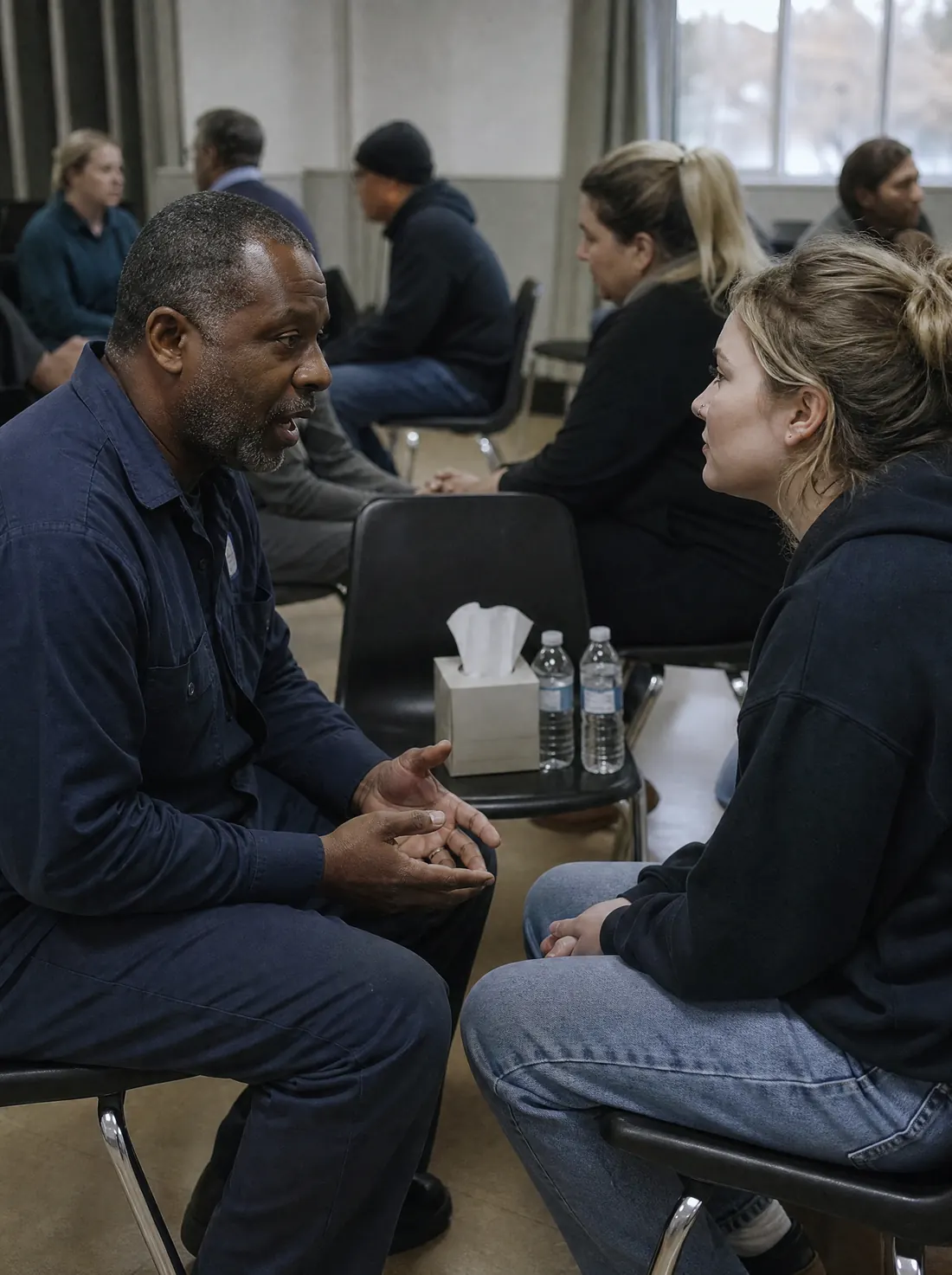
The practical day often runs at the employer’s own workplace. Small groups rehearse realistic workplace scenes with trained facilitators and actors, practise opening the conversation and asking about suicide directly, and lead scored scenarios, including a crisis, against an observer checklist. The day also includes a tabletop exercise on a critical event and a de-identified hazard register.
An office floor can usually supply what the day needs, if you book it ahead:
- A main room with movable chairs, such as a large meeting room or training room.
- Breakout corners for small-group drills.
- A separate room with a door for the crisis station. A glass-walled meeting room may need its blinds closed.
- A quiet room where anyone can step away.
Groups are capped at 12 learners per pair of facilitators. Tell us where your workplace is when you request a quote, along with how many people you want to train.
Local supports
Supports your Toronto staff can be pointed to
In the Care step of the 4C Pathway, the helper encourages supports and agrees one next step. That works best when everyone already knows what is available locally.
- 9-8-8 Suicide Crisis Helpline. Call or text 9-8-8, 24 hours a day, every day of the year. 988.ca
- Toronto Community Crisis Service. A City-funded service for people 16 and older, reached by calling 211. Its staff are civilians, not police, and the service is voluntary and consent-based. City of Toronto
- 211 Ontario. Dial or text 2-1-1 (toll-free 1-877-330-3213), 24/7, in 150+ languages, for non-emergency community and social services. 211 Ontario
- Your employee assistance program, if you have one. Put its number beside these on the staff noticeboard.
Note. Bedrock Minds is training, not a crisis service. If someone is in immediate danger, call 9-1-1.
Build your team’s footing.
Tell us how many people you want to train, which streams, and where your workplace is. We reply within one business day with a quote and available dates.