Psychological health & safety training
Mental health at work, built on solid ground.
Bedrock Minds is a blended course for Canadian workplaces, aligned to CSA Z1003. Your people learn online, then spend one practical day rehearsing the conversations most of them dread, until they can have them well.
- Online modules + 1 practical day
- Streams for staff and leaders
- Certificate of completion, valid 3 years
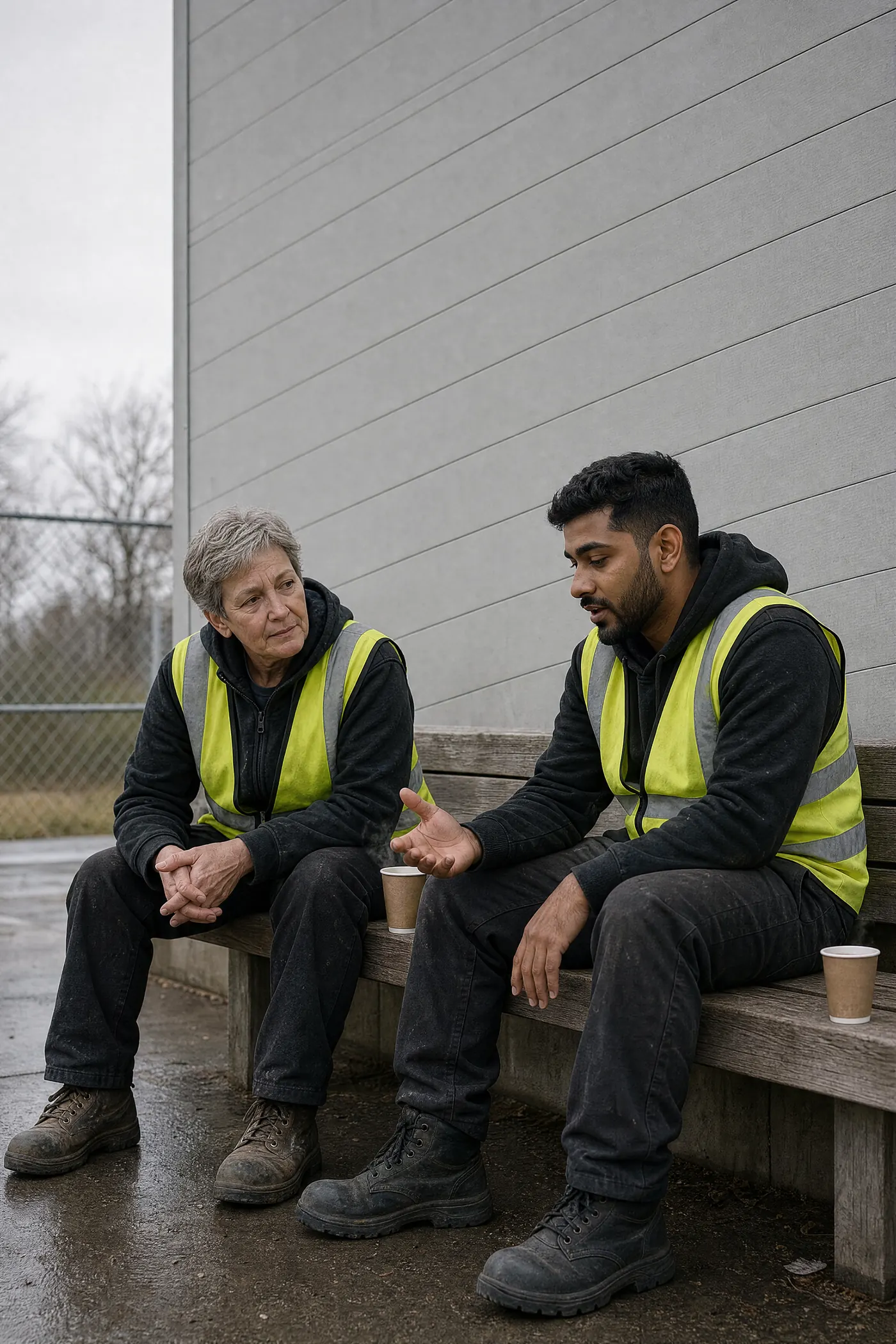
The 4C Pathway Check. Connect. Care. Close the loop. One sequence everyone on your site can use.
Why it matters
Awareness posters don’t prepare anyone for the hard conversation.
Most workplaces have done the lunch-and-learn. What they rarely have is people who have practised what to say, what not to say, and what to do next.
Co-workers notice first
The person who sees someone slipping is usually a peer or a supervisor, not a professional. They need a plan they can follow under pressure.
Psychological hazards are hazards
Workload, role clarity, civility and support are workplace factors you can find, rate and control, just like a trip hazard on the dock.
Skill comes from practice
Every learner leads real scenarios on the practical day, including a crisis scene, and is scored against a clear checklist.
What your people learn
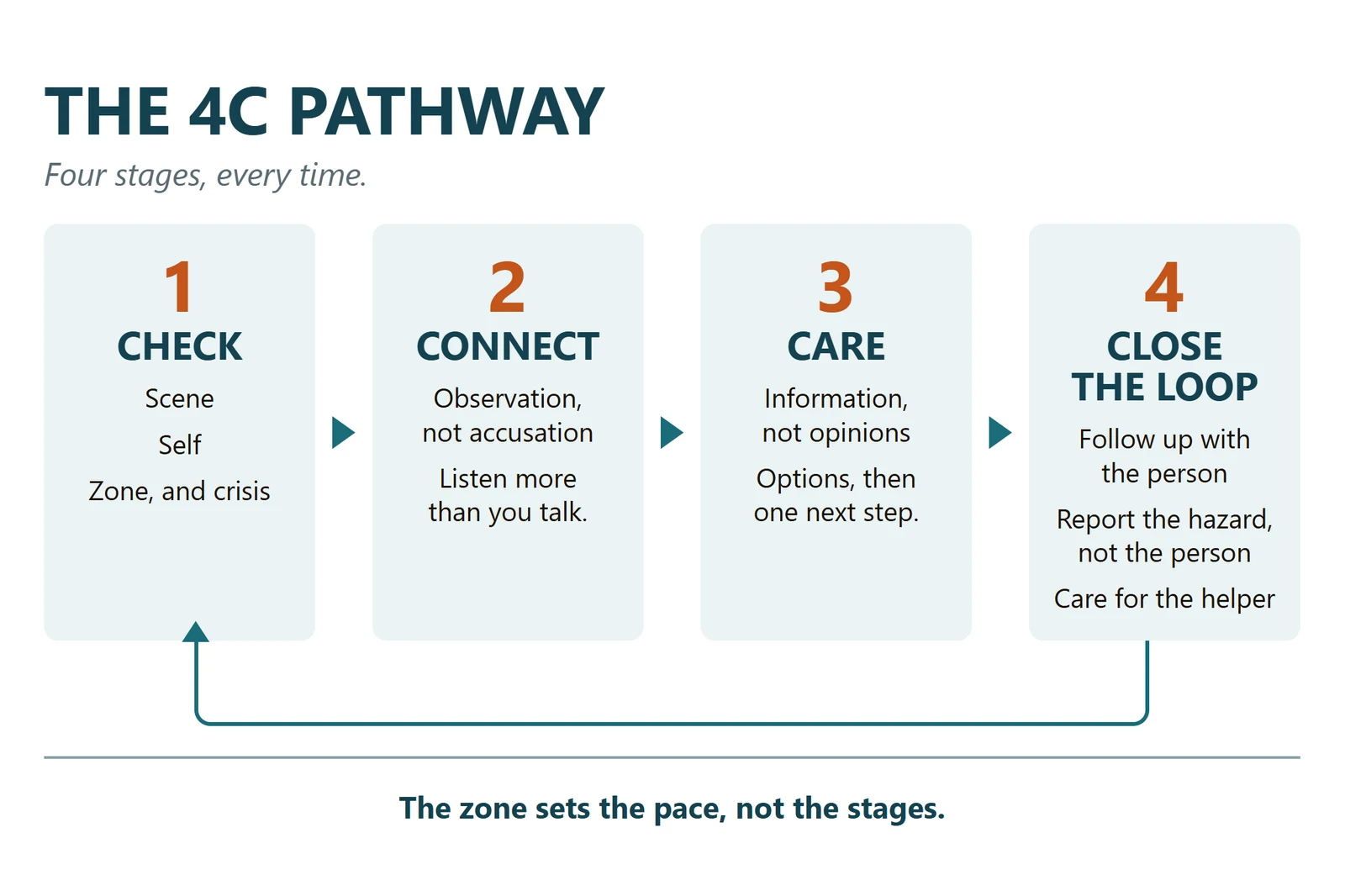
One pathway, four steps, every time.
The 4C Pathway gives every learner the same sequence for responding to a co-worker who is struggling, from a first quiet check-in to a crisis.
1
Check
The scene, yourself, and how the person is doing. When it is warranted, ask directly about suicide.
2
Connect
Approach privately and calmly. Listen more than you talk. Observation, not accusation.
3
Care
Share what helps, encourage professional and personal supports, and agree on one concrete next step.
4
Close the loop
Follow up with the person, report the workplace hazard (not the person), and look after the helper.
A shared language
Four zones, so everyone means the same thing.
Learners use a simple green-to-red continuum to check on themselves, a peer, or a whole team. Every scenario debrief starts with one question: what zone?
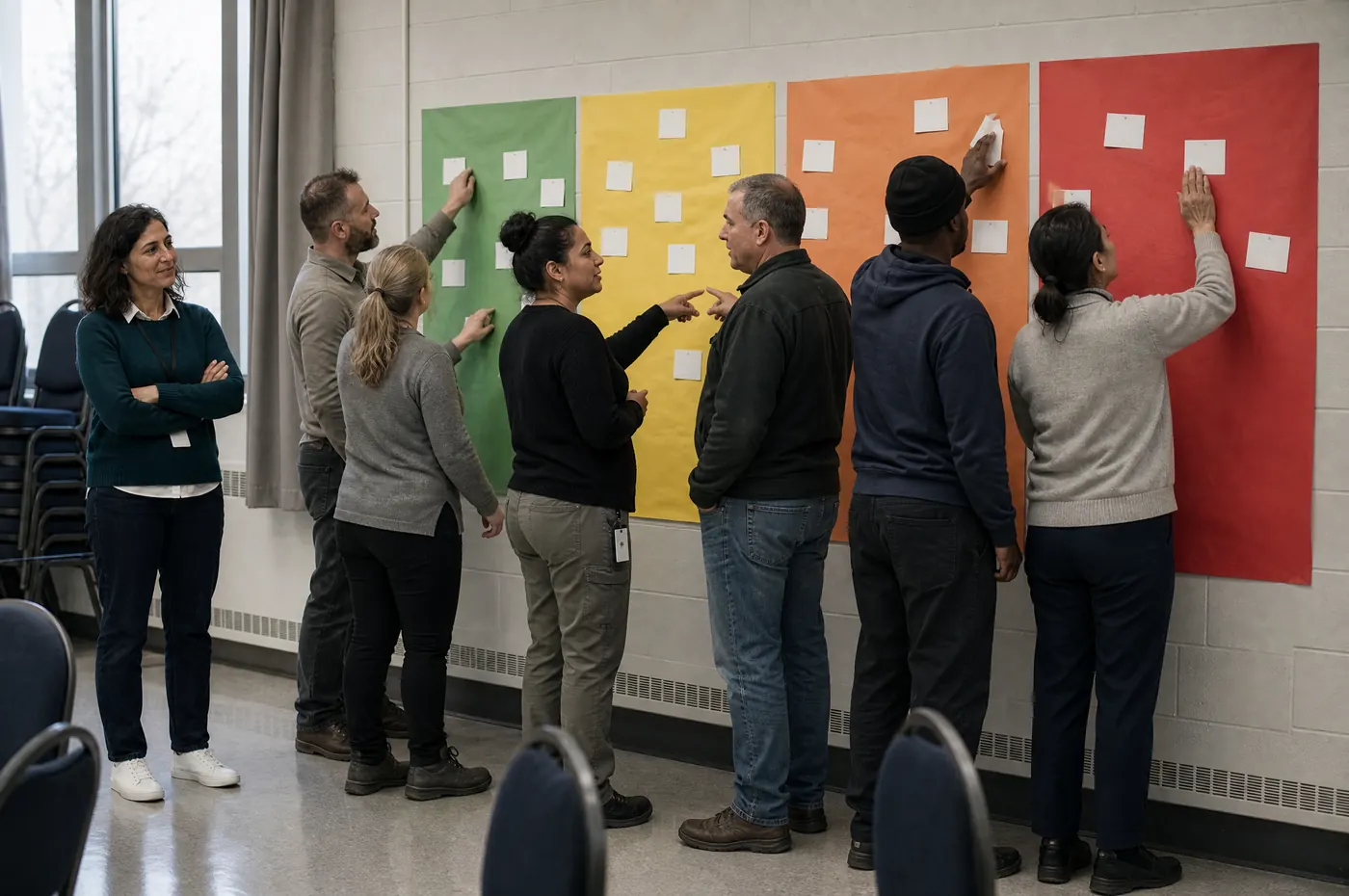
Green
Usual mood, sleep, energy and humour. Keep up the routines that work.
Yellow
Irritable, worried, sleeping badly. An early, informal conversation helps.
Orange
Persistent low mood or anxiety, withdrawal, absences. Use the full 4C Pathway.
Red
Unable to function or in danger. Stay with the person and get help now.
Course format
Learn online. Prove it in person.
Learners complete self-paced online modules and pass each quiz before the practical day. One course, two depths, so your front line and your leaders train together where it counts.
All staff
Responder
For every worker who might be the first to notice.
OnlineAbout 5.5 hours: foundations, the 13 workplace factors, the 4C Pathway, and critical events
In personOne practical day focused on scenarios
BarLead at least two scenarios to standard, including one crisis
Leaders, HR & committees
Champion
For supervisors, HR, joint health and safety committee members and whoever will run your program.
OnlineAbout 10.5 hours across all eight modules, including finding hazards, building the plan and measuring results
In personThe same practical day, plus tabletop and mini-audit roles
BarThe Responder bar plus a written 90-day plan for your own organization
- Module quizzes at 80% or better before anyone attends the practical day.
- A certificate of completion, valid for three years from the practical day.
- A maximum of 12 learners for every pair of facilitators, so everyone gets real practice.
Compare in detail: Responder stream → Champion stream →
The practical day
A full day of doing, not watching.
Small groups rehearse realistic workplace scenes with trained facilitators and actors. Learners lead some scenes, observe others, and debrief every one.
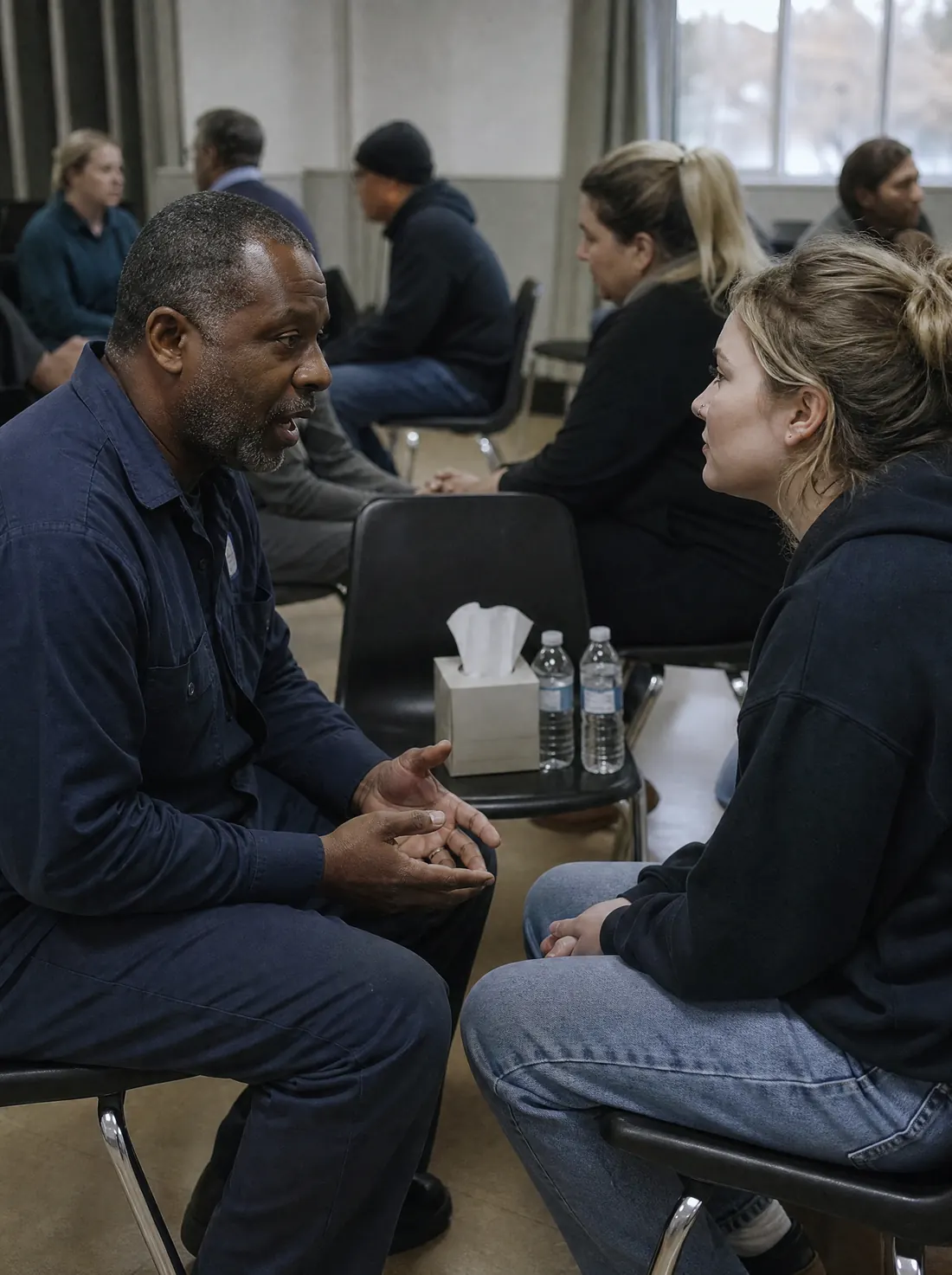
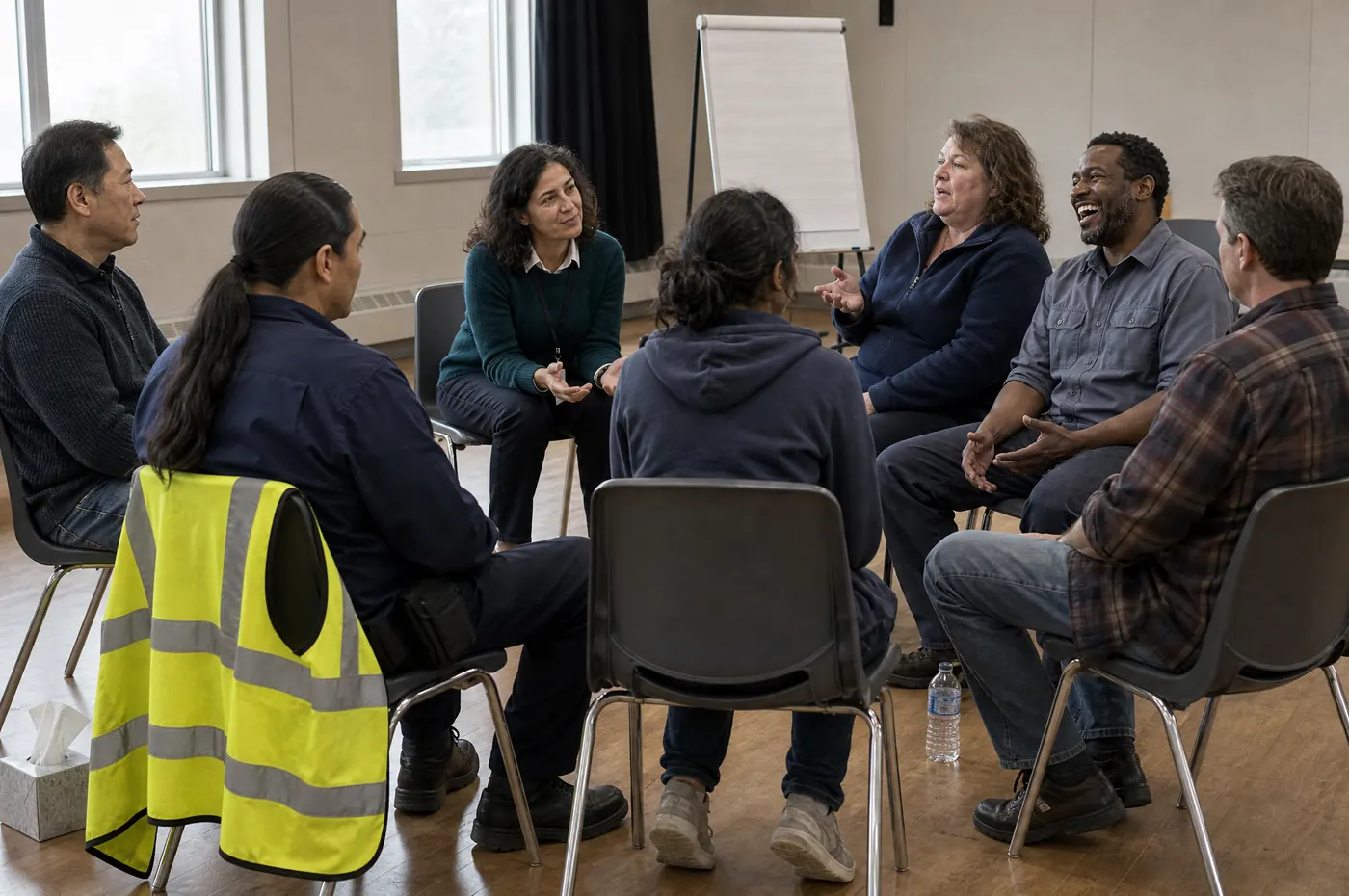
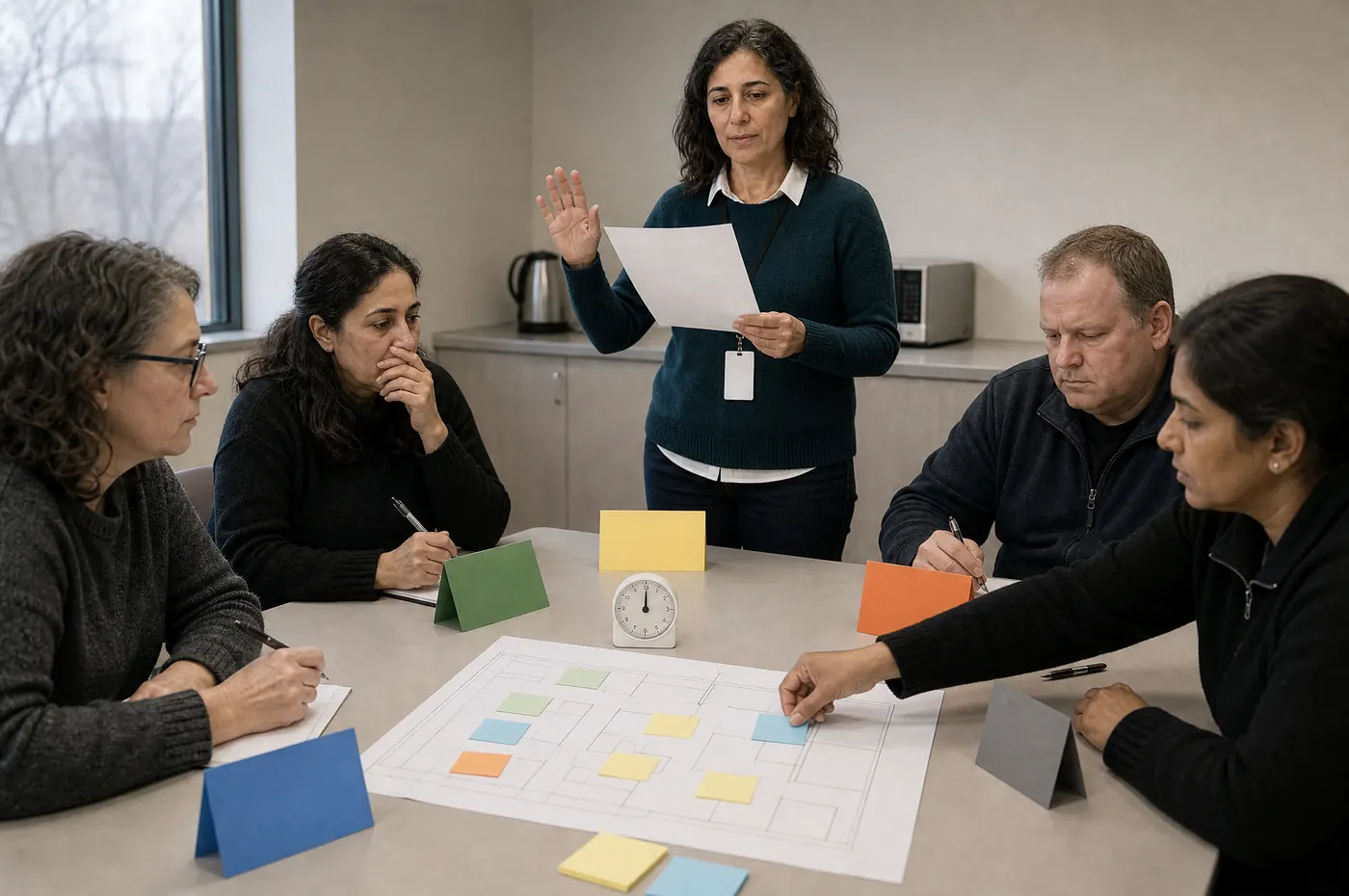
- Skills drillsOpening the conversation, listening without fixing, and asking about suicide directly.
- Scored scenariosRealistic scenes, including a crisis, scored against a clear observer checklist.
- Tabletop exerciseHow your team prepares for, responds to and recovers from a critical event.
- Hazard registerTurning what people notice into de-identified hazards your program can fix.
Aligned to CSA Z1003
Training that feeds your psychological health and safety program.
The course is mapped to every normative clause of CAN/CSA-Z1003-13/BNQ 9700-803, the National Standard of Canada for psychological health and safety in the workplace.
- Competencies to prevent harm, promote health and address incidents.
- Higher expectations for leaders, delivered through the Champion stream.
- Critical event preparedness through crisis scenarios and the tabletop.
- Confidential, de-identified hazard reporting built into Close the loop.
What the certificate is, and isn’t. Learners receive a certificate of completion from Life Safe. It is not an accredited, licensed or regulated credential. It does not make anyone a counsellor or clinician, and it does not certify your organization as conforming to the Standard.
The course practice is consistent with published mental health first aid guidelines and psychological first aid conventions. It was designed by a Canadian Red Cross Psychological First Aid Instructor.
Who books Bedrock Minds
Built for workplaces where people look out for each other.
Owners and operators
Who want a practical answer to “what do we actually do if someone is not okay?”
HR and people leaders
Building a psychological health and safety program and needing trained people to run it.
Health and safety teams
JHSC members and safety managers adding psychological hazards to the hazards they already manage.
Supervisors and crew leads
The people on the floor, the dock and the job site who see it first.
By industry: construction, warehousing, manufacturing, trucking, healthcare and municipal workplaces.
How booking works
From first email to certificates.
- Tell us about your teamHow many people, which streams, where you are, and roughly when.
- Get a quote and a dateWe confirm pricing and book the practical day, often at your own workplace.
- Learners go onlineEach person completes their modules and quizzes at their own pace before the day.
- Practical day and certificatesYour people practise, get scored, and leave with a certificate of completion valid for three years.
Questions
Straight answers.
Is this Mental Health First Aid?
No. Bedrock Minds is an independent program with its own framework, the 4C Pathway. Its practice is consistent with published mental health first aid guidelines, but it is not affiliated with Mental Health First Aid, The Working Mind, the Mental Health Commission of Canada or the Canadian Red Cross.
Will this make our staff counsellors?
No, and it is designed not to. Learners learn to notice, approach, listen, connect someone to the right help, and follow up. The course says plainly on the certificate that it confers no clinical competence.
Does completing the course make us compliant with CSA Z1003?
No training can do that on its own. Z1003 is a voluntary management system standard. The course builds the competencies the Standard expects and gives your Champions the tools to plan, but conformance depends on your organization’s whole program.
Where does the practical day happen?
Practical days often run at the employer’s own workplace. We need a main room with movable chairs, a few breakout corners, a separate room with a door for the crisis station, and a quiet room. Tell us what you have and we will work it out together.
All questions, including whether mental health training is mandatory in Ontario →
Build your team’s footing.
Tell us how many people you want to train, which streams, and where you are. We will come back within one business day with a quote and available dates.
Prefer email? Write to lifesafe101@gmail.com