Industries · Construction
Mental health training for construction crews and the foremen who lead them
On a site, the person who notices a worker is not okay is usually the one beside them on the deck, or the foreman at the morning huddle. Bedrock Minds gives those people a plan they have practised.
The work
Psychological hazards on a construction site
Construction is good at controlling the hazards it can see. The ones that wear people down are harder to spot.
Crews that keep changing
Trades come and go by phase. A crew that has worked together for three weeks may not know each other well enough to see when something is off, and a sub’s worker may not know who to tell.
Pressure from the schedule
Weather, inspections and late deliveries push work into longer days and tighter windows. Fatigue and workload stack up quietly, and the people carrying them rarely say so.
Serious incidents
A fall, a struck-by or a near miss leaves more than a report behind. The workers who saw it, who helped, or who were standing where it could have been them carry it too.
Many crews still treat “tough it out” as part of the job. That does not mean people are not struggling. It means they struggle quietly, and the first sign is often a change only a co-worker would see: someone who stops joking at break, starts showing up late after years of being early, or snaps at the apprentice.
Incidents matter here too. WSIB’s traumatic mental stress policy lists witnessing a fatality or a horrific accident among the traumatic events it recognizes. On a construction site, that is not a hypothetical.
Who notices first
The foreman sees it before the office does
Head office hears about a problem when it becomes an absence, a claim or an incident. The crew sees it weeks earlier.
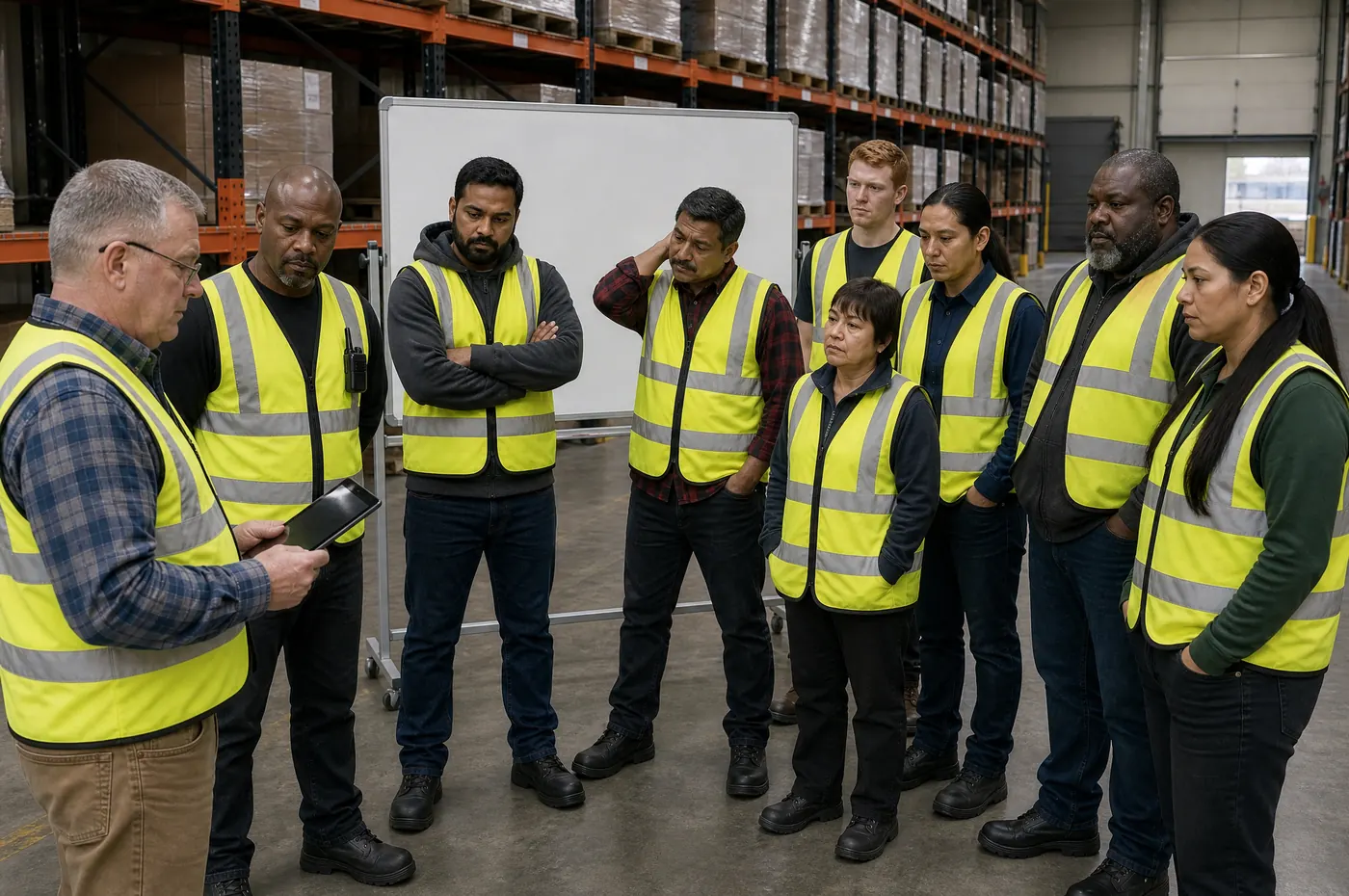
A foreman runs the toolbox talk and sees every face at 7 a.m. A journeyperson knows when their apprentice is off. A co-worker on the same lift notices the long silences. These are the people who can act early, if they know what to say and what to do next.
That is why Bedrock Minds trains the people on the tools and the people who run the crew, not just the office. Everyone learns one sequence, the 4C Pathway, so a labourer and a superintendent use the same steps.
The 4C Pathway on site
- Check the scene, yourself and the person. When it is warranted, ask directly about suicide.
- Connect away from the noise and the rest of the crew. Approach privately and calmly, and listen.
- Care by sharing what helps, encouraging supports and agreeing on one next step.
- Close the loop by following up, reporting the site hazard rather than the person, and looking after yourself afterward.
Two streams
Responder for the crew, Champion for the people who run the program
Most companies put the whole crew through Responder and send foremen, supers and safety staff through Champion.
Responder: all staff
About 5.5 hours of self-paced online modules: foundations, the 13 workplace factors, the 4C Pathway and critical events. Then the practical day, where each learner leads at least two scenarios to standard, including one crisis. About Responder
Champion: foremen, supers, HR and safety
About 10.5 hours online across all eight modules, including finding hazards, building the plan and measuring results. On the practical day, Champions also take tabletop and mini-audit roles, and they finish with a written 90-day plan for their own company. About Champion
JHSC members and safety reps
Psychological hazards belong in the same conversation as fall protection. Champion gives committee members a way to find and rate them, and the hazard register gives them something concrete to bring to the next meeting. For JHSCs
The practical day
Rehearsed before it is needed
The online modules teach the steps. The practical day is where people say them out loud, with someone watching.
Learners pass each module quiz at 80% or better first. On the practical day, small groups rehearse realistic workplace scenes with trained facilitators and actors. They drill the hardest parts: opening the conversation, listening without fixing, and asking about suicide directly. Each learner is scored against an observer checklist, including in a crisis scenario.
The day often runs at the employer’s own workplace. A head office or a large site office can work if it has a main room with movable chairs, breakout corners, a separate room with a door for the crisis station, and a quiet room. Groups are capped at 12 learners per pair of facilitators, so a larger company runs several groups.
After a serious incident
A tabletop exercise walks the group through a critical event: who checks on the workers who saw it, who calls whom, and how the crew gets back to work. Every debrief starts with the same question: what zone? Green, yellow, orange or red gives a crew shorthand for how someone is doing, without asking anyone to explain more than they want to.
What you keep
Each group builds a de-identified hazard register: the conditions that wear people down, with no names attached. That is what Close the loop is for. It turns individual conversations into hazards your safety program can act on. If you are also thinking about claims, read our article on WSIB chronic mental stress and employers.
What this is and is not. Bedrock Minds builds the skills to notice, respond and follow up. It is not counselling or clinical training, and it does not certify your company. Learners receive a certificate of completion from Life Safe, valid three years from the practical day.
Build your team’s footing.
Tell us how many people you want to train, which streams, and where your workplace is. We reply within one business day with a quote and available dates.