Responder stream · all staff
Mental health training for the employees who notice first
Responder gives every worker the same plan for a co-worker who is struggling. About 5.5 hours online, then one practical day of rehearsing it until it holds up under pressure.
Who it’s for
Everyone who might be first on the scene.
The person who sees a colleague slipping is usually a peer or a supervisor, not a professional. Responder is built for them.
Front-line staff
Workers on the floor, the dock, the ward or the job site, who see each other every shift.
Crew leads and go-to people
The colleague people already talk to. Responder gives them a clear sequence instead of guesswork.
Whole teams
When a whole crew trains together, everyone uses the same words and the same steps, so a check-in feels normal.
What learners cover online
About 5.5 hours of self-paced modules.
Learners work through the online modules at their own pace and must pass each module quiz at 80% or better before they attend the practical day.
- Foundations of psychological health and safety at work.
- The 13 workplace factors, from workload to civility and respect, explained on our CSA Z1003 page.
- The 4C Pathway: one sequence for responding to a co-worker, from a quiet check-in to a crisis.
- Critical events: what happens to a team after a serious incident, and how to respond.
The 4C Pathway
Four steps, every time.
Responders learn one sequence and practise it until they can use it without notes.
1
Check
The scene, yourself, and how the person is doing. When it is warranted, ask directly about suicide.
2
Connect
Approach privately and calmly. Listen more than you talk. Observation, not accusation.
3
Care
Share what helps, encourage professional and personal supports, and agree on one concrete next step.
4
Close the loop
Follow up with the person, report the workplace hazard (not the person), and look after the helper.
Four zones
A shared language for how someone is doing.
Learners use a green, yellow, orange and red continuum to check on themselves, a peer or a whole team. Every scenario debrief starts with one question: what zone?
What Responders are not. The course does not make anyone a counsellor or clinician. Responders notice, approach, listen, connect the person to the right help and follow up.
The practical day
Proving it in person.
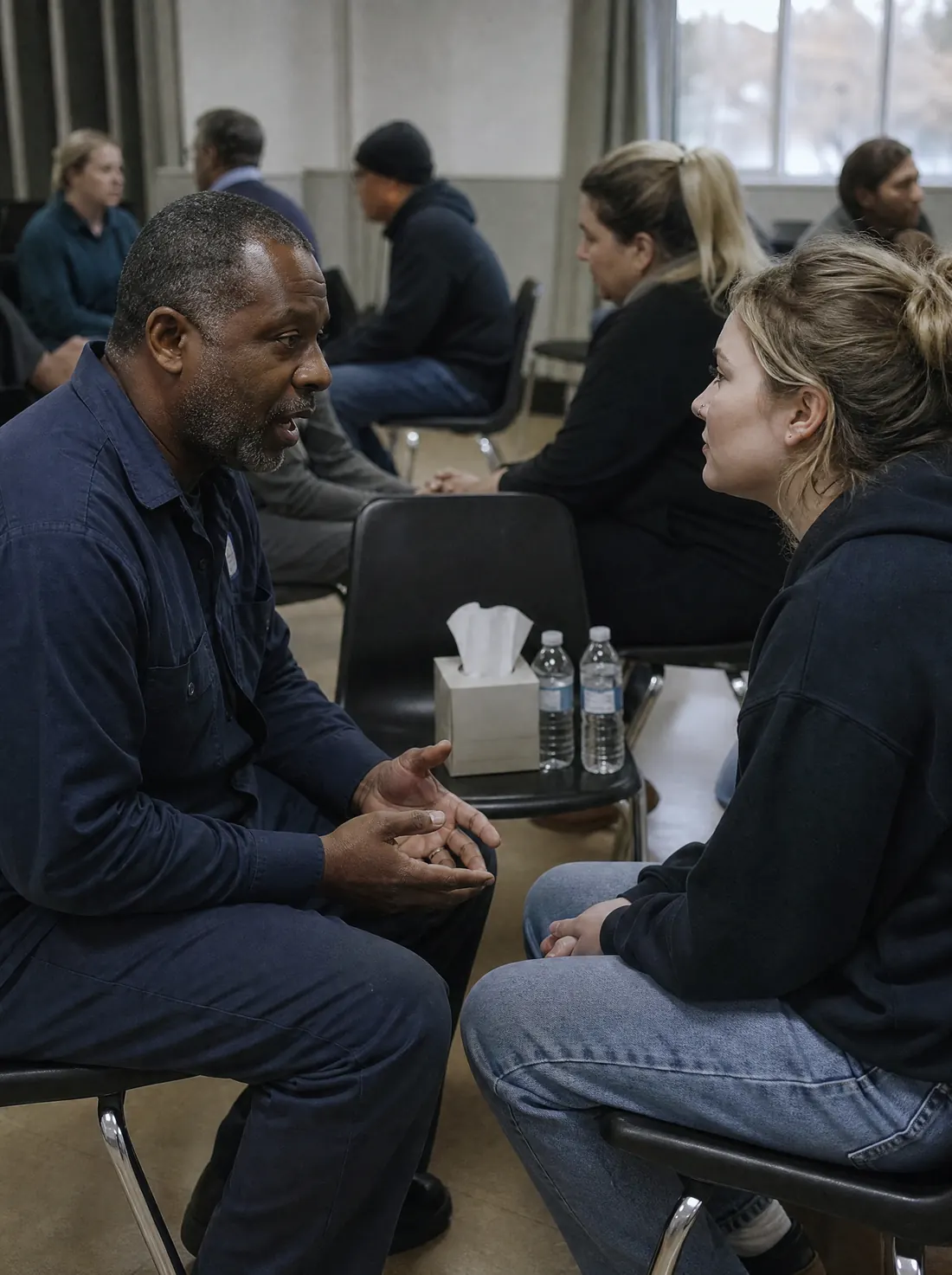
Responders spend one day rehearsing realistic workplace scenes with trained facilitators and actors: paired skills drills, scored scenarios including a crisis, and a structured debrief after every scene.
The bar: each Responder leads at least two scenarios to standard, including one crisis, scored against a clear observer checklist.
What your people leave with
A plan they have used, not just heard about.
A certificate of completion
Issued by Life Safe and valid for three years from the practical day. It is not an accredited or regulated credential.
A shared language
The 4C Pathway and the four zones, so a check-in on Monday sounds the same on every shift.
A way to report hazards
Close the loop turns what people notice into de-identified hazards your program can fix.
Training supervisors, HR or committee members as well? They take the Champion stream, which adds the program-building modules and joins the same practical day.
Build your team’s footing.
Tell us how many people you want to train, which streams, and where your workplace is. We reply within one business day with a quote and available dates.